How to Roll the Perfect Joint, Step by Step
From grinding your flower to the final seal: eight steps to a slow, even burn.
How to roll the perfect joint
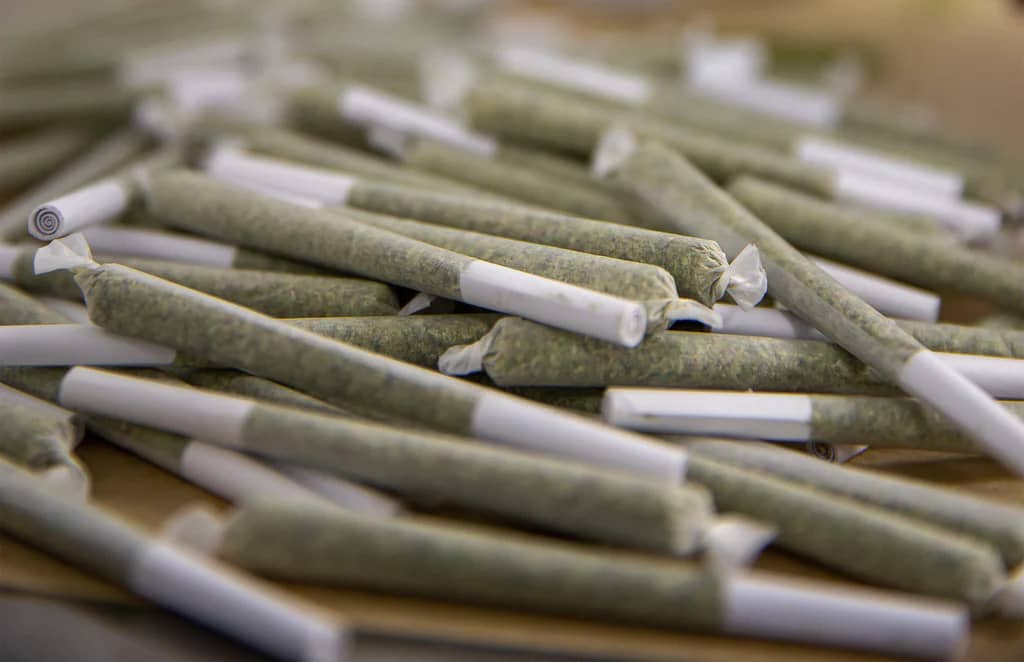
To roll a good joint, grind your flower evenly, fold a paper crutch, pack about half a gram to a gram into the rolling paper, then shape, roll and seal it with a tight seam. It's one of the first things every cannabis lover learns to do — and while it may look easy, a few techniques and tips can make all the difference.
Step 1:
Gather everything you'll need:
- Your favorite cannabis strain
- Rolling papers
- A crutch (filter tip)
- A grinder
- If needed: a pen or similar-shaped object

Step 2:
Grind your cannabis
Start with the grinder, which helps break down the flower neatly and evenly. For the grinder to work well, break the bud up a little first and feed it in pieces — if you cram the whole nug in at once, the result won't be great.
Step 3:
Make the crutch
You can make a crutch out of almost anything made of thin cardboard or stiff paper. Many rolling papers come with crutch material included in the pack.
The point of the crutch is to add stability to the joint and keep cannabis from falling out of the end of the joint — or into your mouth. It isn't essential, but a good crutch is a solid foundation for a perfect smoke.
To fold the crutch, make a few accordion folds at the end of your chosen material, then roll it up to the thickness you're planning for your joint.
Step 4:
Fill the joint
Place the crutch at one end of your rolling paper. Then fill the paper with roughly ½ gram to 1 gram of finely ground cannabis. Use your fingers to start shaping the joint.
There are many different rolling papers out there, but a common favorite is hemp paper, known for being thin yet strong. Hemp papers tend to burn evenly without affecting the flavor of your cannabis.
Step 5:
Close the joint
In this step, you want to tuck the bottom edge of the rolling paper around the cannabis and roll the paper to lock everything inside. Next, pinch the paper between your fingertips and roll it back and forth.
Step 6:
The final roll
Beyond choosing quality materials, this may be the most important part of the joint-rolling process. Tuck the unglued side of the rolling paper into the joint. Using a small amount of moisture, use the glued edge to tack down one end of the paper. Do the crutch end of the joint first — it helps guide the rest of the joint. Continue down the rest of the joint, creating a seam that securely seals the cannabis inside.
Step 7:
Pack the joint
This is where the optional pen from the materials list comes in. It can help you pack down the open end of the joint so the whole thing burns more evenly.
Step 8:
Light it up!
Now, this is definitely the most important part of the process — it's where you get to enjoy all that work. And once you're comfortable rolling the perfect joint the conventional way, don't be afraid to experiment!

How many grams go into a joint?
The amount of cannabis used to roll a joint varies with personal preference and how big you want it. As a general reference, though, most joints use between 0.5 and 1.5 grams of weed. It can depend on the size of the rolling paper and how much cannabis you want to smoke per joint. It's important to remember that dosing and consumption should always be responsible and in line with local laws and regulations. It's also essential to learn about the potential risks and effects of smoking cannabis and make informed decisions about your use.
How do you roll a blunt?
To roll a blunt, follow these steps:
-
Gather your materials: you'll need a blunt or tobacco wrap, ground cannabis, a grinder, a knife or cutter, and a lighter.
-
Prep the wrap: soften the blunt wrap by gently flexing it back and forth to loosen the fibers and make rolling easier.
-
Grind the cannabis: use a grinder to break your weed down finely. Make sure you get an even consistency for a better roll.
-
Prep the blunt wrap: use a knife or cutter to make a cut along the blunt, from the closed end to the open end. This lets you remove the tobacco inside and replace it with cannabis.
-
Fill it with cannabis: remove the tobacco from inside the wrap and fill it with your ground cannabis. Make sure to spread the cannabis evenly along the wrap and avoid overpacking it — that makes rolling easier.
-
Roll the blunt: using the thumbs and index fingers of both hands, start rolling the blunt from the bottom up, pressing gently but firmly so the cannabis compacts. Keep rolling until the wrap closes completely.
-
Seal the blunt: lightly moisten the open edge of the wrap with your tongue or saliva to seal it. Gently apply heat with a lighter to dry and set the seal.
-
Finish and light up: make sure the blunt is well sealed with no gaps. Once it's ready, light the closed end of the blunt with a lighter and start enjoying.
What paper can you use to roll a joint?
There are different paper options you can use to roll a joint. Here are some of the most common:
-
Rolling papers: rolling papers are a popular choice for joints. They come in different sizes, brands and materials, like hemp, cellulose or rice paper. You can pick a thinner or thicker paper depending on your preference.
-
Cigarette papers: some people also use regular cigarette papers, like the ones used for rolling tobacco. These papers tend to be thinner and are widely available.
-
Cellulose papers: cellulose paper is an alternative to traditional paper and offers a slower burn. It's made of pure cellulose and contains no added chemicals. You can find it in different sizes and brands.
-
Unbleached papers: there are unbleached papers made from natural materials with no chemical additives. They're a more natural option, often preferred by anyone after a purer smoking experience.
It's worth remembering that when rolling a joint, you should handle the paper carefully so it doesn't tear. And if you want to use a crutch, you can buy pre-made filter tips or make one yourself out of cardboard or stiff paper.
THE CLUB
Join the community
Growers with a name and a face, traceable batches, a real community. No smoke, no empty promises.
Join the clubKEEP READING
 GROWING
How to Support a Giant Outdoor Cannabis Plant: Ties, Stakes, Netting and Soil
A 4-meter plant with 2-meter branches won't hold itself up: the tying, staking and netting routine that keeps a monster standing.
 GROWING
Gorilla Rainbow and Gorilla Glue: The High, the Yield and When to Harvest GG Auto
An easygoing indica-dominant cross, its famously sticky parent, and how to read trichomes and pistils to time a Gorilla Glue Auto harvest.