Life as a Weed Trimmer in California: Work, Dollars and Marijuana
What seasonal work on California's cannabis farms really looks like: the pay, the legal risks and a trimmer's daily routine.
Life as a weed trimmer in California: WORK, DOLLARS AND MARIJUANA, by Juan Quintana
Trimmers are cannabis's true migrant workers, the so-called "trimmigrants." Once they land on a farm, they work every single day until the harvest is done, then move on to the next one and do it all over again. Trimming usually pays by the pound, somewhere between 100 and 150 dollars per pound of trimmed bud, and most of the foreigners who do it are working without a permit.
The headline might sound tempting to some and risky to others. Trinity, Mendocino and Humboldt counties, up in Northern California, became the mecca of marijuana growing back in the '70s. Their rural landscape of hills, mountains and huge, dense redwood forests that are tough to police had already made the area the epicenter of US cannabis cultivation since the '60s. Every year, between August and December, people from all over the world, especially Latin America, head there to work the trimming season: the pruning or "manicuring" of the buds, the last link in the production chain before the weed hits the market.

The California Weed Harvest: The Argentine Boom
Over the last few years, more and more Argentines have started leaving the country to try out work experiences like Work and Travel. But there's a newer way to do it that a lot of people dream about: cannabis work. Why? Because trimming jobs in California usually pay by output, and the going rate runs from 100 to 150 dollars per pound of trimmed weed, just under half a kilo. Every trimmer is expected to get through at least a pound a day. More is better.
"One of the things they ask when you start working on the farms is that you don't give interviews or talk about the job," says Fernando*, a harvest veteran now retired from the cannabis fields. "I went for six years and never had a single problem. Not getting into the country, not working, not leaving. There's a lot of paranoia," he adds. The truth is, without a work permit, there's always the risk of coming out badly if there's a raid. "Farm managers always tell you that if there's an inspection, grab your passport and run for the woods."
How Do People Get In to Work?
Unlike other Work and Travel setups or working holiday visas in Australia or New Zealand, working in California is illegal for Argentines. To work as trimmers in California, they usually enter the US as tourists, which means they're not allowed to work, and on top of that, a lot of those farms aren't licensed.
Did California Legalize Marijuana?
Illegality and a taste for risk are two things you need for this experience, but there's also a legal framework that helped the industry grow. In 1996, California voters passed Proposition 215, which legalized marijuana with a doctor's recommendation.
Then, in 2018, the Adult Use of Marijuana Act took effect in California, allowing cannabis users to possess up to 28.5 grams (1 oz) and grow six plants at home. That let many growers work the California harvest to produce on a bigger scale and brush up against some degree of legality for large-scale cultivation. Still, most producers stay on the black market to avoid paying taxes.
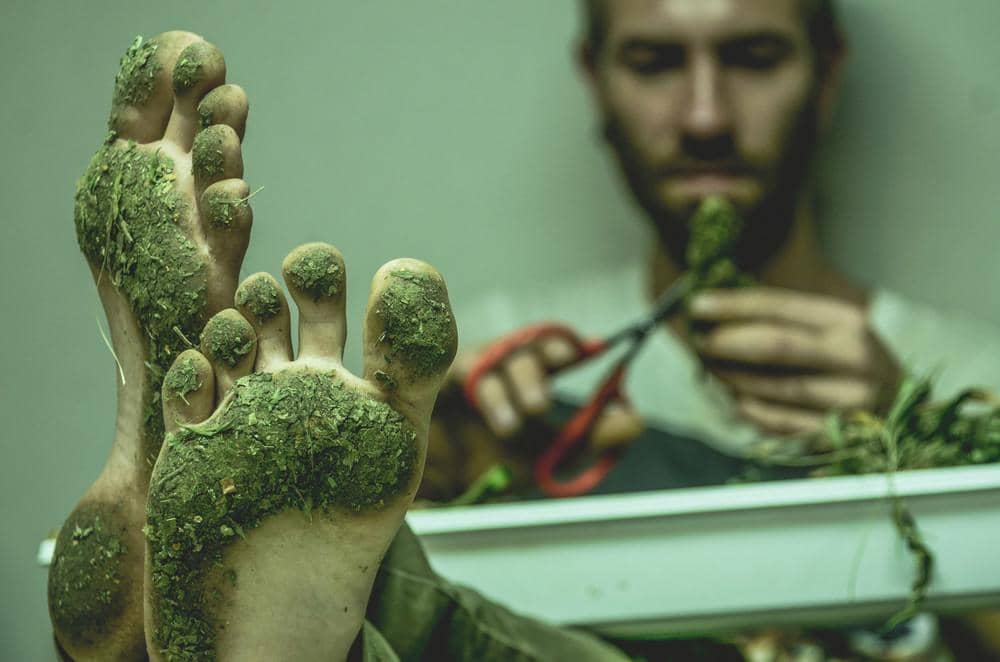
But it's not all risk and numbers. It's also work and a connection with nature. Growing cannabis follows the same basics as growing plenty of other plants: watering, transplanting, cutting leaves so they don't sap the plant's energy, cleaning flowers if pests show up, and the famous moment of "trimming," which is giving the buds their manicure. Yep, sitting in a chair for hours on end, trimming cannabis buds.
"The best months to find work are October and November, but the season starts in mid-July and runs until early December," says Julieta*, who has three seasons as a California trimmer under her belt. "My day starts with a coffee I make in the farm's rustic kitchen, a piece of bread or some fruit, and then around 11 a.m. I start working. Everyone can work as long as they want, as long as they hit the day's target." Martín* thinks one of the job's biggest perks is the freedom: "Not having a fixed schedule and being able to manage my time however I want is something I'd always been looking for, and I found it here. I'm most active in the afternoon, and since I'm not that desperate for money, I work fewer hours than everyone else."

How Much Do Weed Trimmers Make in California?
The payoff is so tempting that working the cannabis harvest in California, in temperatures around 35 °C (95 °F) and on days of rain or hail, takes a back seat. Trimming pays by the total weight of the buds you process. A pound (about 450 grams) pays between 100 and 150 dollars.
For field work on California farms, tending the plants while they grow, you're paid by the hour, usually between 15 and 20 dollars. "Everyone's greed shows. Some days you'd rather do anything but work, but when you remember that a couple of hours will get you 100 dollars, you just get to it," Julieta said. At 20 dollars an hour, working nine hours a day with one day off a week, you'd make a total of 4,320 dollars a month.
"I met a lot of people who ended up leaving after a few days once they saw how many hours you have to put in," says Julieta. With the pros and cons on the table, it's up to each person to draw their own conclusions. "The key is that you're genuinely into cannabis culture," she stressed.
*Name changed to protect the source's identity.
If you liked this piece, you can also read about...
Cannabis Greenhouse Setup: Types, Ventilation and Light Dep Tips

THE CLUB
Join the community
Growers with a name and a face, traceable batches, a real community. No smoke, no empty promises.
Join the clubKEEP READING
 LEGAL
LEGALHow to Travel With Weed — and Not Get Caught
From Argentina's 40-gram REPROCANN rule to smell-proof packing: what actually works when you move cannabis from point A to point B.
 LEGAL
LEGALCan You Fly With a Wax Pen in Argentina?
A guide to airline policies on bringing a wax pen in your carry-on, and the legal risks you face depending on where you're headed.